
Start with one understandable choice
Discovery is easier with a starting point: a familiar song, instrument, rhythm or mood. Write down what interests you instead of requiring yourself to find the best artist. Fame does not guarantee a personal fit.
This route helps you run a small listening session and retain observations. It does not rebrand names from earlier articles as today's popularity ranking or promise that a personal recommendation will suit everybody.
Familiar → contrast → return
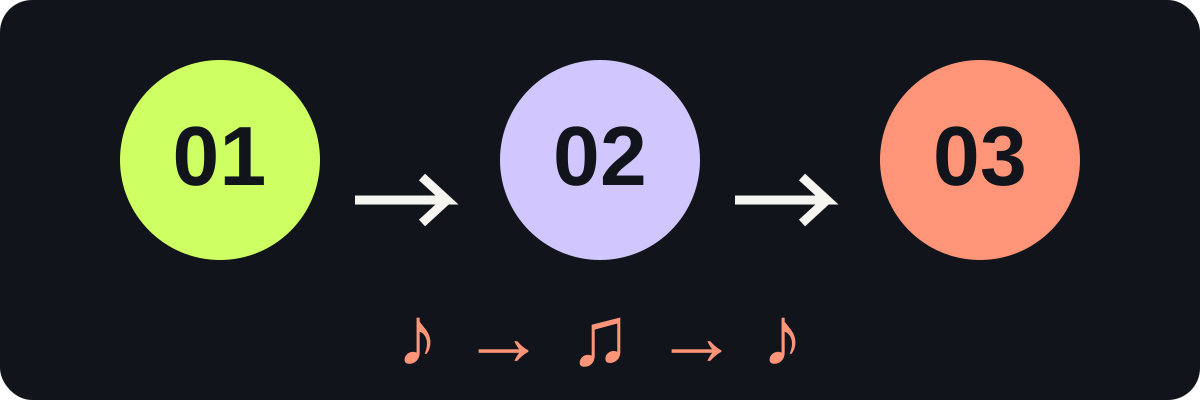
One familiar artist or track, rather than an enormous list.
A few related sounds and a few deliberately different choices.
Test interest with another listening session.
Build a short session
- Choose one familiar track or artist.
- Select a few related suggestions and a few deliberately contrasting options.
- Use search, an artist page or available Spotify Radio as starting tools.
- Listen long enough to notice your own response; there is no universal compulsory duration for evaluating taste.
- Save what you want to revisit and note why.
Use a manageable list you can hear again. Saving a hundred songs without returning does not establish that you found a hundred new favourites.
Change one feature at a time
If a familiar recording appeals through its rhythm, try a similar pulse with another timbre or language. If a voice interests you, try a different instrumental setting. This makes your response easier to understand than changing every feature at once.
Genre names can guide exploration without describing every recording exactly. Do not infer a genre from a title alone or treat one service's label as a final description of your taste.
A listening-note template
| Track and link | What attracted attention | Do I want to return? |
|---|---|---|
| Example A | Rhythm and a short introduction | Hear again on another day |
| Example B | An unfamiliar timbre | Compare another song by the artist |
| Example C | Contrasting language and arrangement | Decide after another listen |
These are invented rows, not reviews of actual tracks. Add the date and context: focused listening, travel and background music can produce different impressions. Do not turn these observations into universal quality scores.
Review the list later
Return to saved tracks at another time. Compare your first impression with your wish to hear them again. Keep the exact recording link, especially where several releases or remixes share a title.
If one track works for you, try another by the artist and one contrasting choice. If nothing fits, change the starting clue. An unsuccessful session is a reason to refine the question, not evidence that new music is pointless.
Where listening history helps
Personal statistics show which artists and recordings received time in the supplied files. They may recall forgotten music or reveal one long track affecting the total. They do not establish artistic merit or measure a person's curiosity.
Compare equal periods and the same measure. Use the result to choose a next track rather than a duty to increase your artist count. A useful session ends with a few considered discoveries and a clear note about them.
Sources and useful next steps
Source documentation checked 17 October 2026. Calculations and worksheets are explanatory examples, not reported artist results.