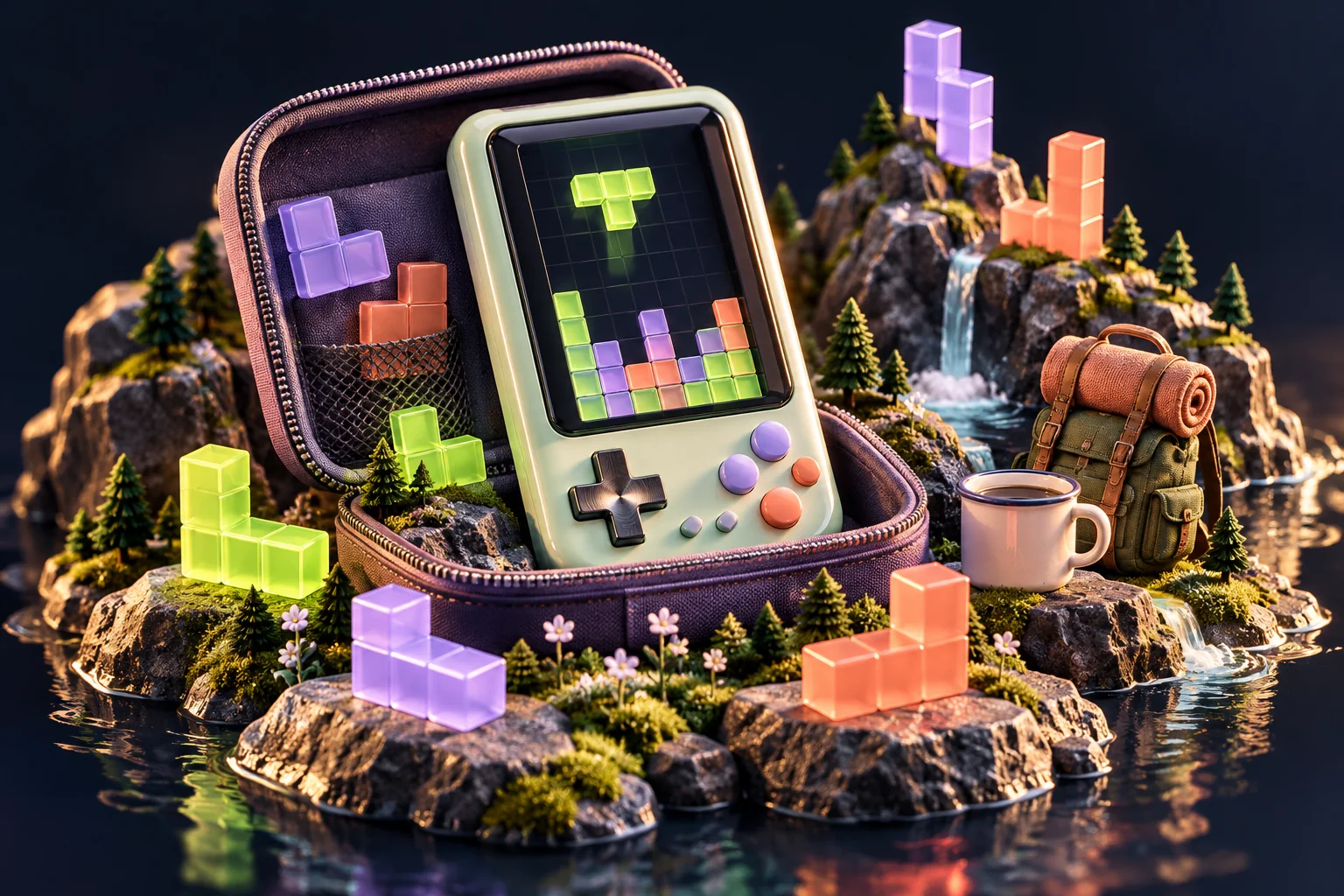
Your route through this guide
The Timeless Appeal of Tetris
Tetris has maintained its position as a gaming cornerstone for nearly four decades due to several fundamental strengths:
Perfect Difficulty Curve: Gradually increasing challenge that grows with player skill
Simple Premise, Deep Strategy: Easy to learn mechanics with virtually unlimited mastery potential
Universal Accessibility: Intuitive design requiring no specialized gaming background
Endless Replayability: Procedurally generated puzzles ensuring no two games are identical
Satisfaction Factor: The unique pleasure of clearing lines and achieving order from chaos
Foundational Skills
Success in Tetris begins with developing these fundamental approaches:
Piece Recognition: Instantly identifying each tetromino and its potential placements
Stack Management: Maintaining a relatively flat surface with minimal gaps
T-Spin Awareness: Understanding the special rotation properties of the T-piece
Well Creation: Strategically leaving a vertical column for long pieces
Preview Utilization: Effectively using the "next piece" indicator for planning
Players who develop these basic skills will see dramatic improvements in their scores and survival times, transforming the experience from frantic reaction to strategic planning.
Advanced Techniques for Competitive Play
For those seeking to achieve truly impressive scores, these sophisticated strategies are essential:
Perfect Clear Setups: Creating configurations that clear the entire field at once
4-Wide Combos: Building a specific structure that enables extended combo chains
Finesse Movement: Optimizing piece placement with minimal rotations and movements
Downstacking Recovery: Techniques for efficiently reducing dangerous high stacks
Hold Piece Strategy: Maximizing the strategic potential of the piece reserve system
These advanced approaches separate casual players from true Tetris masters, enabling the extraordinary scores seen in competitive play.
Cognitive Psychology Insights
Tetris's remarkable grip on player attention stems from several psychological mechanisms:
Zeigarnik Effect: The brain's preoccupation with unfinished tasks creates continuous engagement
Variable Reward Schedule: Unpredictable success patterns generate stronger addiction than consistent rewards
Flow State Induction: The perfect balance of challenge and skill creates deeply satisfying immersion
Pattern Recognition Satisfaction: The brain's inherent pleasure in identifying and completing patterns
Completion Gratification: The distinctive satisfaction of clearing lines and creating order
These psychological hooks create Tetris's famously compelling "just one more game" quality that has captured players for generations.
The "Tetris Effect" Phenomenon
Regular players often experience the documented psychological phenomenon called the Tetris Effect:
Visual Persistence: Seeing falling blocks and patterns when closing eyes after extended play
Problem Reframing: Mentally organizing real-world objects into Tetris-like configurations
Dream Integration: Tetris imagery appearing in dreams following intensive play sessions
Cognitive Afterimages: Brief hallucinations of blocks falling in peripheral vision
Problem-Solving Transfer: Applying Tetris organization principles to unrelated tasks
This fascinating cognitive effect demonstrates the game's powerful impact on neural pathways and visual processing systems.
Classic Experience
The traditional Tetris gameplay remains the foundation of the experience:
Marathon Mode: Endless play with gradually increasing speed
Sprint Challenge: Clearing a specific number of lines as quickly as possible
Ultra Time Attack: Maximizing score within a fixed time limit
Survival Extreme: Enduring pre-filled boards with challenging configurations
Zen Mode: Relaxed play without failure conditions for stress-free enjoyment
These core modes provide varied approaches to the fundamental Tetris experience, catering to different player preferences and time constraints.
Modern Enhancements
Contemporary versions of Tetris often include these gameplay innovations:
Battle Mode: Competitive play where cleared lines attack opponents
Item Variations: Special power-ups that modify standard gameplay
Challenge Missions: Specific objectives beyond basic line clearing
Custom Themes: Visual and audio customization options
Achievement Systems: Goal-based progression tracking across multiple sessions
These modern additions extend Tetris's longevity by creating fresh objectives and experiences while maintaining the classic core gameplay.
Historical Significance
Tetris holds a unique place in gaming and cultural history:
Cold War Connection: Created by Soviet programmer Alexey Pajitnov during the 1980s
Global Phenomenon: One of the first video games to achieve worldwide recognition
Nintendo Relationship: Instrumental in the Game Boy's success and portable gaming evolution
Legal Complexities: Subject of famous international licensing disputes
Longevity Record: Extraordinary persistent popularity across multiple decades
This rich history gives Tetris cultural significance beyond most video games, making it not just entertainment but a legitimate historical artifact.
Artistic Influence
Tetris has made remarkable impacts across various artistic domains:
Architectural Inspiration: Building designs incorporating tetromino-like elements
Musical Composition: The iconic "Tetris theme" (Korobeiniki) gaining global recognition
Fashion Design: Clothing patterns and structures influenced by tetromino shapes
Visual Art Movement: Pixel art renaissance drawing from Tetris's minimalist aesthetic
Literary References: Appearances in literature as metaphor for order amid chaos
These cultural influences demonstrate how Tetris has transcended its origins as a simple puzzle game to become a significant artistic and cultural touchpoint.
Control Mastery
For maximum performance, players should focus on these control techniques:
Hard Drop Efficiency: Using instant placement for speed advantage
Rotation Systems: Understanding the specific rotation patterns of different versions
Delayed Auto-Shift: Mastering the timing of piece movement acceleration
Wall Kick Awareness: Leveraging the ability of pieces to rotate against walls
Hold Queue Strategy: Optimizing the piece exchange system for maximum advantage
These technical skills dramatically improve both survival time and scoring potential by increasing the efficiency and precision of piece placement.
Mental Approach
The psychological approach to Tetris significantly impacts performance:
Proactive Thinking: Planning several moves ahead rather than reacting
Panic Prevention: Maintaining composure as speeds increase
Pattern Recognition: Identifying and preparing for common configurations
Risk Assessment: Evaluating when to attempt difficult maneuvers versus safe plays
Recovery Prioritization: Focusing on fixing dangerous situations before optimization
These mental strategies help players achieve the flow state where peak performance becomes possible, turning frantic survival into controlled mastery.
Tournament Structure
Organized Tetris competition has evolved into a sophisticated competitive scene:
Classic Score Competitions: Traditional highest-score tournaments
Versus Battle Formats: Head-to-head matches with attack mechanics
Speed Challenge Events: Races to clear specific line counts
Endurance Contests: Survival-focused competitions at extreme speeds
Technique Showcases: Demonstrations of advanced maneuvers and strategies
This competitive ecosystem provides structure and recognition for dedicated players seeking to test their skills against others.
Notable Records and Achievements
The Tetris community has established several remarkable benchmarks:
Maximum Score Thresholds: Breaking the scoring limits of various game versions
"Invisible Tetris" Mastery: Playing successfully with invisible blocks
Perfect Game Achievements: Completing entire sessions without mistakes
Speed Records: Fastest clearance of specific line counts
Endurance Milestones: Surviving extreme difficulties for unprecedented durations
These achievements represent the pinnacle of human performance in Tetris, demonstrating the extraordinary depth hidden within this seemingly simple game.
Technical Enhancements
Contemporary versions of Tetris often feature these improvements:
Enhanced Visuals: Modern graphics while maintaining the classic aesthetic
Responsive Controls: Improved input precision and customization options
Multiplayer Integration: Seamless competitive and cooperative play
Profile Systems: Comprehensive statistics tracking and progression
Mobile Optimization: Touch controls and interface adapted for smaller screens
These technical advancements ensure Tetris remains relevant and enjoyable across modern platforms while preserving the core experience.
Gameplay Evolutions
The fundamental Tetris formula has been thoughtfully expanded with:
Hold Piece Functionality: Reserving pieces for strategic deployment
Extended Preview: Showing multiple upcoming pieces for better planning
Ghost Piece Feature: Projection showing where the current piece will land
T-Spin Recognition: Scoring bonuses for advanced rotation techniques
Combo Systems: Progressive rewards for consecutive line clears
These gameplay refinements add strategic depth while respecting the elegant simplicity that defines Tetris.